
Updated August 4, 2026 · 6 min read · By Las Vegas Handyman Reliable Service
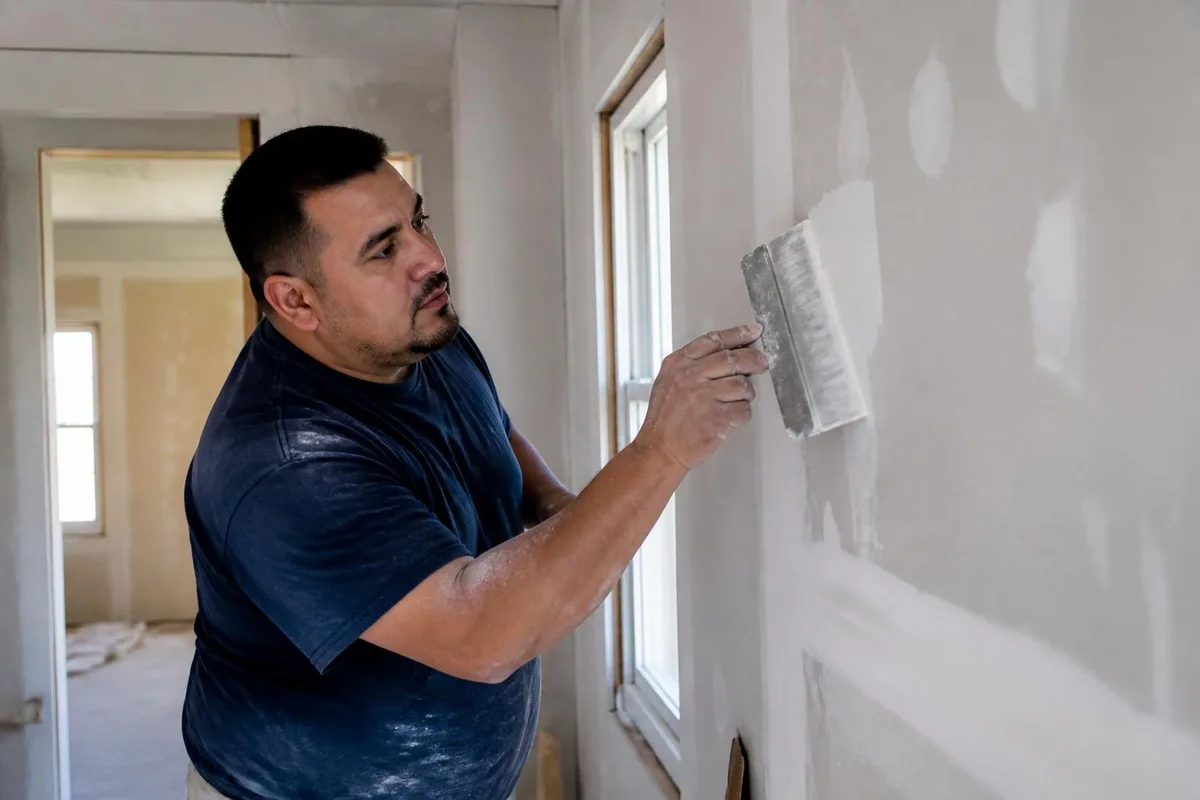
If you own a home anywhere from Centennial Hills to Green Valley, you have probably watched a thin diagonal line creep out from the top corner of a doorway. It is the most common interior complaint in the valley, and it is almost never the emergency homeowners fear.
The three local causes
1. Thermal cycling
Las Vegas routinely swings from 75°F at dawn to 112°F by late afternoon in July. Framing lumber, stucco, and drywall all expand at different rates. That daily push-and-pull works joints loose over a few seasons — especially on west- and south-facing walls that take direct afternoon sun.
2. Caliche and expansive soil
Much of the valley sits on caliche, a hardened calcium-carbonate layer, over soils that swell when wet and shrink when dry. Monsoon rain, over-irrigated landscaping, and a dry winter each shift the slab slightly. The house rides that movement and telegraphs it into the drywall.
3. Normal new-construction settling
Homes in newer areas like Skye Canyon, Inspirada, and Cadence typically show their first cracks in years one through three as framing dries out and the structure settles. This is expected, and most builder warranties cover a single cosmetic drywall touch-up in that window — worth checking before you pay anyone.
Cosmetic vs. structural: how to tell
| What you see | Likely meaning | What to do |
|---|---|---|
| Hairline diagonal crack from a door or window corner | Normal thermal/settling stress | Cosmetic repair with mesh tape and texture match |
| Straight seam crack along a taped joint or ceiling line | Tape failure from humidity swings | Re-tape and refinish the joint |
| Nail pops in a row across a wall or ceiling | Framing shrinkage | Reset with screws, patch, retexture |
| Crack wider than 1/4", or one you can see light through | Possible structural movement | Structural engineer before any patching |
| Doors and windows suddenly binding, floors sloping | Foundation movement | Foundation specialist, not a handyman |
| Brown staining or soft drywall around the crack | Active water intrusion | Find and stop the leak first, then repair |
How a lasting repair is done
- Cut out the loose paper and any failed tape back to sound drywall — filling over a bad joint guarantees the crack returns.
- Bridge the joint with fiberglass mesh or paper tape set in compound so the repair, not the old seam, carries the movement.
- Build three thin coats, feathering each 8–12 inches wider than the last, so no ridge shows under Las Vegas's harsh side light.
- Match the texture. Most valley homes use knockdown or orange peel; the match is the part DIY repairs get wrong and the reason patches stay visible.
- Prime the patch before painting, or the repaired area flashes a different sheen once the wall dries.
- Paint corner to corner on the affected wall. Sun-faded Las Vegas paint rarely matches a spot touch-up, even from the original can.
Reducing future cracking
- Keep interior temperature within a narrower band rather than letting the house swing 20°F while you're away.
- Move irrigation emitters at least 18–24 inches away from the foundation and keep watering consistent year-round.
- Clear and extend downspouts so monsoon runoff doesn't pool near the slab.
- Use flexible caulk, not rigid compound, at trim-to-wall transitions where movement is expected.
- Address stucco cracks on the exterior — they let moisture reach framing and make interior cracking worse.